
Looking Back at 2025: Key Product Updates


Intro
2025 was a year of structural evolution for the product. Rather than shipping isolated features, the focus was on rebuilding core systems: payment logic, user experience, analytics, and access management. Below is an overview of the most important product updates and why they matter for businesses.
A Unified On-Ramp / Off-Ramp Order Model
One of the most impactful updates of 2025 was the full integration of a global on-ramp / off-ramp order model directly into the product.
Previously, top-ups and payouts were handled as separate flows. In 2025, they became part of a single, consistent order system with unified logic, statuses, and calculations.
This brought several key benefits:
- a consistent approach to both fiat and crypto operations;
- transparent fee calculation and predictable final amounts;
- a scalable foundation for expanding into new regions and currencies.
This model enabled the rollout of additional fiat and blockchain support throughout the year:
- EUR payouts — March
- CNY support — June
- AED support — December
- USDC on Binance Smart Chain (BSC) — May
Operational efficiency was further improved with:
- free internal transfers;
- flexible signature requirements for payouts;
- Tron resource delegation (Energy and Bandwidth) to any wallet.
Together, these changes reduced operational friction and improved reliability at scale.
Payment Widget 2.0: A New Standard for Checkout UX
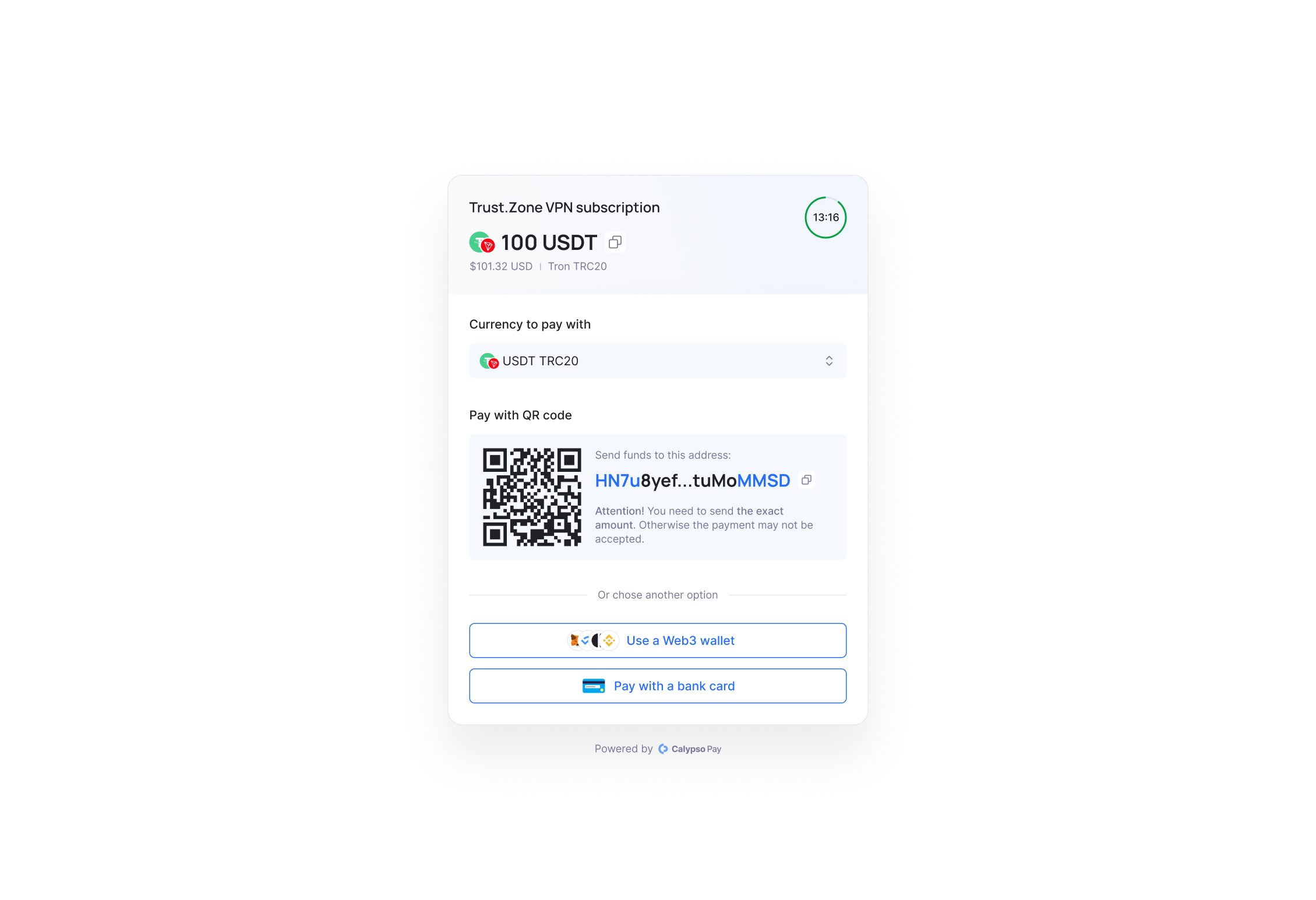
The release of Payment Widget 2.0 marked a major step forward in user experience.
This was not just a visual refresh, but a complete redesign of the payment flow:
- clearer and more intuitive step structure;
- a modern, cleaner interface;
- improved usability across devices and payment scenarios.
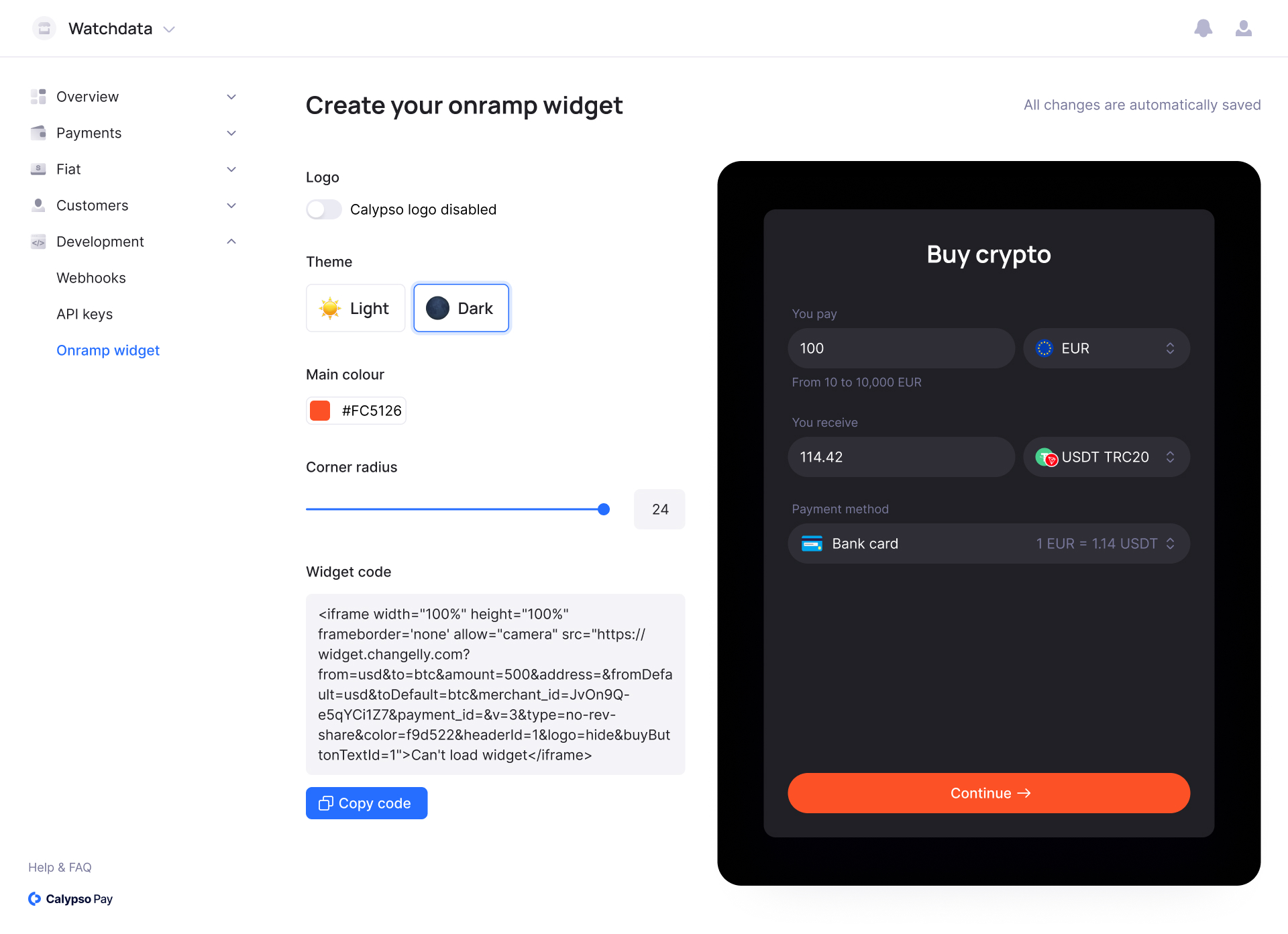
Alongside this, the Widget UI Constructor was introduced, allowing merchants to customize the look and feel of their payment widgets directly from their accounts:
- brand colors and styles;
- layout adjustments;
- no additional development required.
This significantly reduced customization costs while delivering a more consistent checkout experience.
Reporting and Analytics: From Data Exports to Decision Tools
Reporting underwent one of the most substantial upgrades in 2025.
Key improvements included:
- Transactional reports with balances, providing visibility into both movements and current account states;
- Enriched reporting data, adding more operational context to each transaction;
- Separated fee breakdowns, clarifying how total costs are formed;
- Fiat equivalents, simplifying accounting and reconciliation;
- Fee pre-calculation (dry-run), enabling businesses to preview fees and final amounts for payouts and invoices before execution.
As a result, reporting evolved from basic data exports into a practical financial management tool.
Role Model Upgrades and Access Control
As teams and integrations grew more complex, access control became increasingly important.
In 2025, the role-based permission system was upgraded:
- a dedicated Developer role was introduced;
- existing roles were expanded and refined;
- global and granular permission management was improved.
These changes made it easier to manage API access, integrations, and multi-team environments while reducing operational risk.
White Label Infrastructure and Partner Enablement
A strong focus was also placed on White Label solutions and partner infrastructure.
Throughout the year, the platform delivered:
- dedicated registration links for partners;
- branded email communications;
- configurable fee structures;
- support for partner-specific setups
This laid the groundwork for scalable growth through partners and resellers.
Summary
In 2025, the product moved into a new level of maturity:
- the on-ramp / off-ramp order model became the core of the payment architecture;
- Payment Widget 2.0 redefined the checkout experience;
- reporting evolved into a powerful financial insight tool;
- role management and White Label infrastructure prepared the platform for scale.
Together, these updates form a cohesive system designed for growth, flexibility, and long-term reliability.